Clarity Act Uncertainty Keeps DeFi’s Bigger Market Bet on Hold
The CLARITY Act could expand DeFi into tokenized equity and bond markets, but Senate uncertainty is keeping institutional capital on the sidelines.…
Gradual ECB policy shifts amid inflation risks could tighten liquidity, impacting crypto and risk assets, while geopolitical tensions persist. The post ECB’s Kazaks signals gradual policy adjustments amid inflation risks…
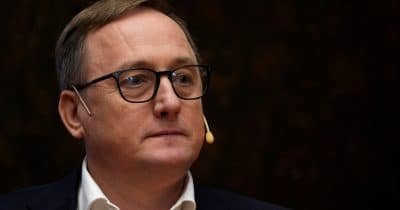
ECB’s Kazaks signals gradual policy adjustments amid inflation risks
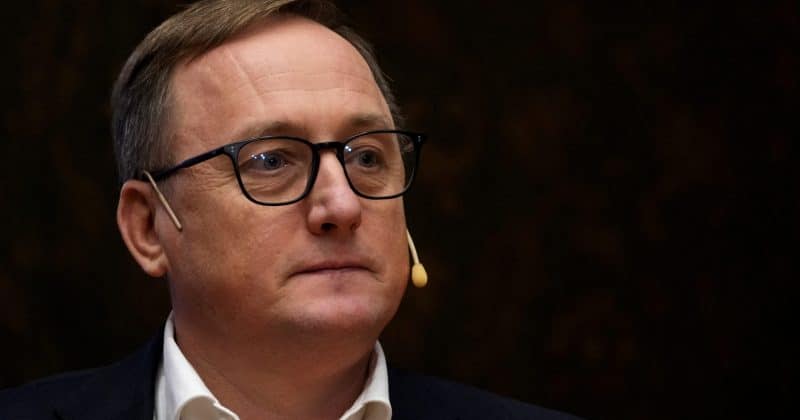
The Latvian central bank governor warns of rising inflationary pressures as the ECB navigates its first rate hike of the current cycle
Just now ago
Share
Add us on Google
Martins Kazaks, Governor of the Bank of Latvia and a member of the European Central Bank’s Governing Council, is putting markets on notice. The ECB can move gradually if conditions require it, but the risks to inflation are tilting upward.
The comments come on the heels of the ECB’s June 11, 2026 decision to raise key interest rates by 25 basis points. That marked the first hike in the current cycle, a pivot that has traders across every asset class recalibrating their assumptions about what comes next.
The ECB framed the 25 basis point hike as a direct response to the Middle East conflict’s impact on commodity markets and inflation expectations. The central bank revised its inflation projections for 2026 and 2027 upward, driven largely by those rising energy costs. The 2% medium-term inflation target remains the north star, but getting there just became more complicated.
Advertisement
Kazaks acknowledges that inflation risks cut both ways, up and down. But he’s clearly more worried about the upside pressures. If oil prices remain stubbornly high, there’s a real risk that inflation expectations become “de-anchored” — people stop believing the ECB can actually hit its target, and start behaving as if higher inflation is permanent.
Kazaks was deliberate in emphasizing the word “gradual.” The ECB is not committing to a fixed rate path. The data-dependent approach gives them maximum flexibility given that the global economy is being buffeted by conflicts that no central bank can control.
Kazaks did not mention Bitcoin or any digital asset in his remarks. Neither did the broader ECB communications around the June rate decision.
The more important signal is the direction of travel. If the ECB follows this hike with another, the cumulative effect on liquidity conditions could create meaningful headwinds for crypto. Rising rates in Europe also strengthen the euro relative to the dollar, which can have knock-on effects for Bitcoin pricing since crypto markets are predominantly dollar-denominated.
The Middle East conflict driving energy prices higher is the same kind of uncertainty that has historically pushed some capital into Bitcoin as a hedge. So the forces here are pulling in opposite directions: tighter monetary policy is bearish for risk assets, but geopolitical instability has sometimes been bullish for crypto as a perceived safe haven.
The key variable to watch is whether the ECB’s inflation projections continue to be revised upward. Conversely, if energy prices stabilize and inflation starts tracking back toward 2%, the ECB may pause after this single hike.
Disclosure: This article was edited by Editorial Team. For more information on how we create and review content, see our Editorial Policy.
The CLARITY Act could expand DeFi into tokenized equity and bond markets, but Senate uncertainty is keeping institutional capital on the sidelines.…

The OCC issued preliminary conditional approval on August 14, 2026, for World Liberty Trust Company, National Association, to charter as a national…

This comes after a continuous few weeks of selling its stash.
USDT and USDC contracts move from the next period, while returning to four-hour settlement requires 36 stable hours. The post KuCoin’s new…