Clarity Act Uncertainty Keeps DeFi’s Bigger Market Bet on Hold
The CLARITY Act could expand DeFi into tokenized equity and bond markets, but Senate uncertainty is keeping institutional capital on the sidelines.…
Iran's price cuts for China could reshape global oil dynamics, intensifying competition in Asia and impacting oil-dependent economies. The post Iran slashes crude prices for China as shipments surge after…

Iran slashes crude prices for China as shipments surge after peace deal
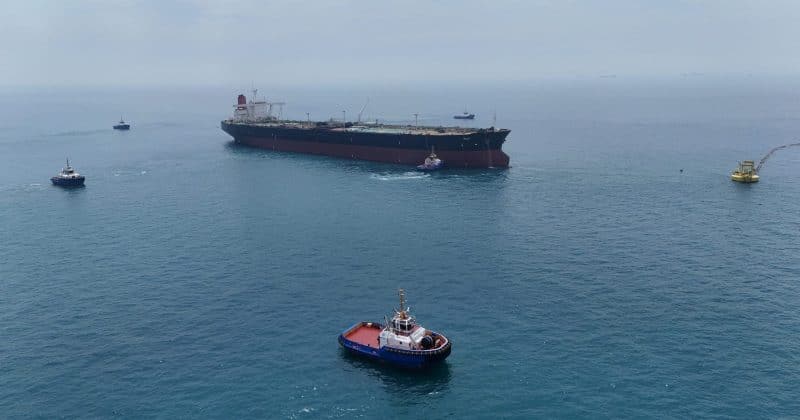
Iranian exporters cut oil prices for Chinese refiners as post-deal shipments ramp up, reshaping energy markets and sending ripples through crypto
Jun. 22, 2026
Share
Add us on Google
Iranian crude sellers are offering discounts to Chinese buyers as oil shipments ramp up in the wake of the interim US-Iran peace deal. The price cuts target China’s independent “teapot” refiners, the scrappy smaller processors that have long been the primary consumers of sanctioned Iranian barrels.
China historically receives roughly 90% of the country’s oil exports.
In May 2026, exports had cratered to somewhere between 65,000 and 160,000 barrels per day. Iran was shipping well over a million barrels daily before the escalating conflict that preceded the deal.
The interim peace agreement, signed between June 17 and 19, changed the calculus overnight. Under the deal’s framework, Iran can resume oil sales through waivers, and shipments are already in transit from ports like Chabahar on Iran’s southeastern coast.
Advertisement
Global oil prices have responded accordingly, falling approximately 5% as the market prices in the return of Iranian supply. Crude has drifted toward the $76 to $80 per barrel range as fears about supply disruptions, particularly around the Strait of Hormuz, have eased substantially.
If Iranian exports normalize, Iran could potentially generate up to $60 billion annually in oil revenues.
Iran needs to recapture market share quickly. During the blockade period, Chinese refiners found alternative suppliers, and luring them back requires competitive pricing. The teapot refiners, which operate on thinner margins than state-owned giants like Sinopec, are particularly price-sensitive.
Oil-producing nations that benefited from Iran’s absence, Saudi Arabia and Iraq among them, now face renewed competition for Asian market share.
Bitcoin has rallied toward the $66K to $73K range amid optimism surrounding the peace deal.
Approximately $1 billion in previously seized Iranian crypto assets have reportedly resurfaced in the context of ongoing sanctions negotiations.
The reopening of the Strait of Hormuz to normal traffic is particularly significant. Roughly 20% of the world’s oil passes through that narrow waterway.
Disclosure: This article was edited by Editorial Team. For more information on how we create and review content, see our Editorial Policy.
The CLARITY Act could expand DeFi into tokenized equity and bond markets, but Senate uncertainty is keeping institutional capital on the sidelines.…

The OCC issued preliminary conditional approval on August 14, 2026, for World Liberty Trust Company, National Association, to charter as a national…

This comes after a continuous few weeks of selling its stash.

USDT and USDC contracts move from the next period, while returning to four-hour settlement requires 36 stable hours. The post KuCoin’s new…