Plume launches nBND vault backed by Fidelity Total Bond ETF
Plume's nBND vault could accelerate institutional adoption of tokenized assets, blending traditional finance with blockchain innovation. The post Plume launches nBND vault…
The case could redefine AI governance, impacting investment strategies and industry dynamics, with potential ripple effects on global tech power. The post Testimony in Elon Musk’s case raises trust questions…
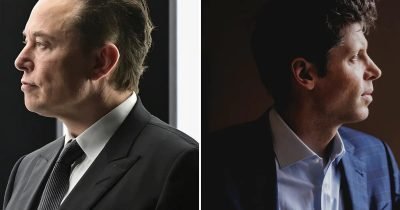
Testimony in Elon Musk’s case raises trust questions about OpenAI’s Sam Altman
Altman took the stand to defend his character as Musk’s $130 billion lawsuit puts OpenAI’s governance, nonprofit origins, and CEO credibility on trial.
Just now ago
Share
Add us on Google
Sam Altman sat in a federal courtroom in Oakland and told a judge he is an “honest and trustworthy business person.”
Elon Musk’s lawsuit against OpenAI and its CEO is seeking $130 billion in damages. The core allegation: OpenAI abandoned its founding nonprofit mission and became exactly the kind of profit-driven AI juggernaut it was created to prevent.
Altman’s testimony centered on a theme that should be familiar to anyone who has watched power struggles unfold at tech companies. He argued that OpenAI’s foundational principles were specifically designed so that no single person could exert control over the organization.
Musk co-founded OpenAI as a nonprofit research lab in 2015. Musk departed from the organization in 2018, and in the years since, OpenAI has transformed into something that looks a lot more like a conventional tech giant than a charitable research institute.
Advertisement
Altman pushed back on Musk’s narrative during his testimony, refuting allegations that he had sought long-term control of OpenAI before Musk’s departure.
OpenAI has been described in court as “the best-funded nonprofit in the history of mankind.”
The organization’s current valuation exceeds $850 billion. Calling something with an $850 billion price tag a “nonprofit” requires a fairly generous interpretation of the word.
OpenAI’s transition from a pure nonprofit to a capped-profit structure, and now toward what appears to be a more traditional corporate model, is the factual backbone of Musk’s complaint. He argues this wasn’t just mission drift. It was a betrayal of the founding agreement.
Altman’s defense rests on the idea that scaling AI safely requires enormous capital, and enormous capital requires structures that can attract investment.
OpenAI is building technology that will reshape industries, labor markets, and potentially the balance of geopolitical power. Who controls that technology, and under what governance framework, is not a trivial question.
If Musk prevails, or even partially prevails, it could force a restructuring of how OpenAI operates. That has downstream implications for Microsoft, which has invested billions into the company, and for every business building on top of OpenAI’s models.
The $130 billion damage figure is almost certainly aspirational. Courts rarely award amounts that large, and Musk’s legal team would need to demonstrate harm at a scale that’s difficult to quantify.
Disclosure: This article was edited by Editorial Team. For more information on how we create and review content, see our Editorial Policy.
Plume's nBND vault could accelerate institutional adoption of tokenized assets, blending traditional finance with blockchain innovation. The post Plume launches nBND vault…
OKXICE has notified the SEC that it intends to launch a tokenized securities trading venue under the innovation exemption.
The US debt spiral is not imminent as 8.5% growth outpaces the 3.4% average rate on federal debt despite 5% yields. The…
While some national polls favored President Lula over Senator Flávio Bolsonaro, Polymarket accurately predicted the opposite outcome days before the polls, giving…
