AI stock sell-off in Asia prompts shift to safer assets like US Treasuries
The AI stock sell-off in Asia highlights growing investor caution, potentially impacting future AI investments and economic stability. The post AI stock…
The deal could stabilize US agricultural markets, reduce trade tensions, and enhance economic ties, but execution risks remain significant. The post China commits to $17B in US agricultural purchases from…
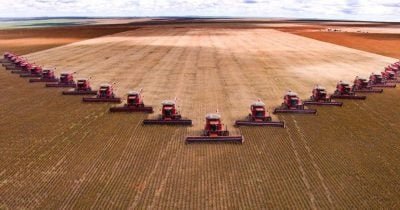
China commits to $17B in US agricultural purchases from 2026 to 2028
The multi-year deal, negotiated between Trump and Xi, locks in billions in annual farm exports and adds to an existing soybean agreement already on the books.
Just now ago
Share
Add us on Google
China has formally agreed to buy at least $17 billion worth of US agricultural products every year from 2026 through 2028. The commitment came out of discussions between President Donald Trump and Chinese President Xi Jinping in Beijing, and it represents one of the most concrete trade pledges between the two countries in years.
Here’s what makes this interesting: the $17 billion annual floor is on top of a separate, pre-existing agreement for China to purchase 25 million metric tons of US soybeans each year through 2028. In other words, Beijing is stacking commitments, not replacing them.
The agreement covers a broader basket of commodities than previous arrangements. While soybeans have historically dominated US agricultural exports to China, this deal expands the scope to include pork, dairy, beef, and sorghum, among other products.
Advertisement
The US Trade Representative has signaled expectations of “double-digit billions” in total annual agricultural purchases from China. The $17 billion floor, combined with the soybean commitment, suggests the actual dollar figure could land well above that threshold depending on commodity prices and volumes.
This deal doesn’t exist in a vacuum. US-China trade relations have been a rollercoaster for the better part of a decade, with agricultural goods frequently caught in the crossfire.
Previous trade deals included agricultural purchase targets that China didn’t always meet. The Phase One trade agreement, for instance, set ambitious benchmarks for Chinese purchases of US goods that fell short of projections, partly due to the pandemic disrupting global supply chains and partly due to, well, the inherent difficulty of enforcing purchase commitments across sovereign nations.
For traditional commodity markets, the implications are straightforward. Guaranteed demand floors tend to support prices, or at minimum reduce downside risk. US soybean, pork, and beef futures could see tighter trading ranges as the market prices in more predictable Chinese demand.
The 2026 start date also means there’s a gap between the announcement and execution.
Disclosure: This article was edited by Editorial Team. For more information on how we create and review content, see our Editorial Policy.
The AI stock sell-off in Asia highlights growing investor caution, potentially impacting future AI investments and economic stability. The post AI stock…

The AI stock sell-off in Asia highlights growing investor caution, potentially impacting future AI investments and economic stability. The post AI stock…
AI stock gains bolster public pensions, highlighting tension between financial benefits and political scrutiny over AI's societal impact. The post US public…

AI stock gains bolster public pensions, highlighting tension between financial benefits and political scrutiny over AI's societal impact. The post US public…