Money20/20 USA 2026: How Bitcoin, Stablecoins and AI Are Reshaping the Future of Finance
Bitcoin Magazine Money20/20 USA 2026: How Bitcoin, Stablecoins and AI Are Reshaping the Future of Finance From digital ownership to borderless value,…
Wells Fargo, the U.S. banking giant managing roughly $2.3 trillion in assets, is in talks with Payward, Kraken’s parent company, to supply crypto liquidity for the bank’s digital-asset trading operations.…
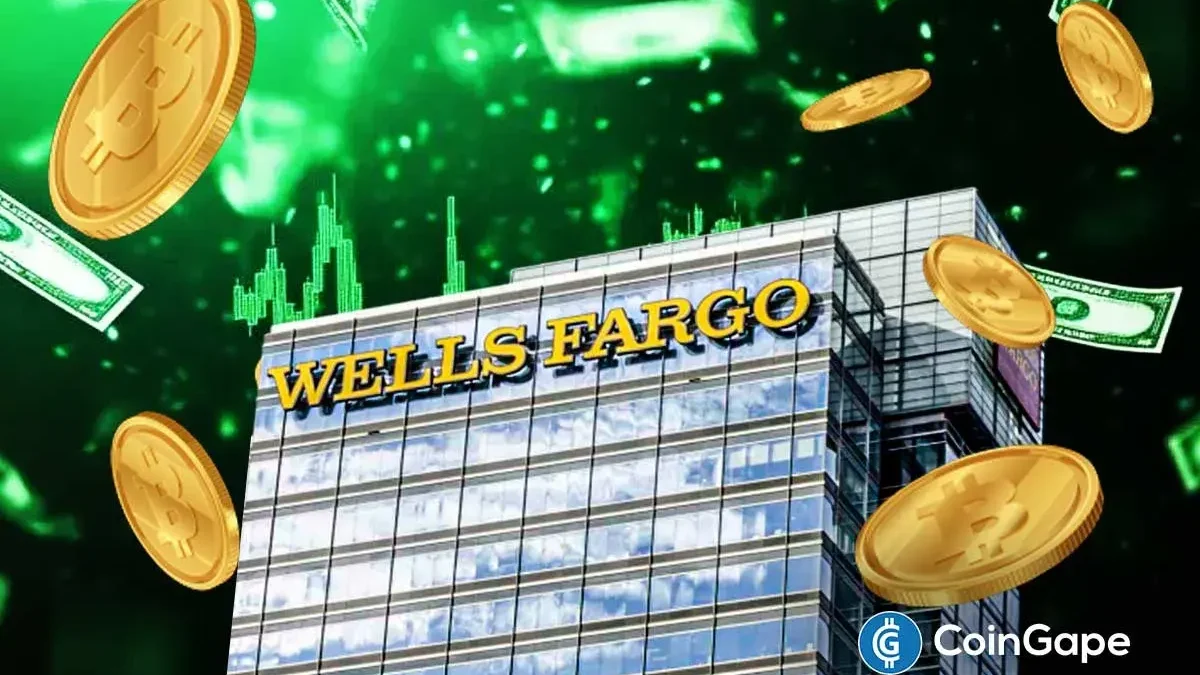
HIGHLIGHTS Wells Fargo is in early talks with Payward, Kraken’s parent, to source crypto liquidity for its digital-asset trading, though no deal is confirmed. Under the “rent the rails” model, Payward would route and price trades via Kraken Prime while Wells Fargo keeps its client relationships and brand. The talks follow Payward’s growing bank network, with SoFi live, SGB Net integrated, and BNY also reported to be in broader discussions. Wells Fargo, the U.S. banking giant managing roughly $2.3 trillion in assets, is in talks with Payward, Kraken’s parent company, to supply crypto liquidity for the bank’s digital-asset trading operations.
According to a report on October 7, the talks are ongoing and may not produce a deal. Both sides declined to comment publicly.
What a Wells Fargo–Payward Deal Would Actually Do
The proposed arrangement is not a custody mandate or a balance-sheet Bitcoin purchase.
Under the structure being discussed, Payward would act as an execution-layer crypto liquidity provider.
Wells Fargo keeps its client relationships and brand intact. Payward, through Kraken Prime, its institutional prime brokerage arm, would handle the routing and pricing of digital-asset trades.
In simple terms: Wells Fargo clients get the crypto trading experience; Payward powers the market behind it. That is the “rent the rails” model.
It lets a megabank enter digital-asset trading at low capital cost, without running its own matching engine.
Wells Fargo’s crypto footprint already runs deeper than most realize.
The bank disclosed significant crypto ETF and equity holdings, including more than 6.5 million IBIT shares and nearly 726,000 Strategy (MSTR) shares, in its latest SEC filing.
It has also backed compliance firm Elliptic and trading-tech firm Talos, and it joined a consortium working on a dollar stablecoin.
A liquidity deal with Payward would extend that footprint from passive ETF exposure into active crypto trading rails.
The relationship between the two firms is also not new. Wells Fargo served as Nasdaq’s exclusive capital-markets adviser when Nasdaq invested $100 million in Payward in September 2026, a deal that valued the exchange at $21 billion and deepened collaboration on tokenized equities and market surveillance.
A liquidity deal would push that adjacency from advisory work into live commercial infrastructure.
Payward’s Bank Network Is Growing Fast, And Wells Fargo Is the Latest
The Wells Fargo talks surface as Payward builds an accelerating stack of banking partnerships.
Earlier in October, Kraken’s parent integrated SGB Net, Singapore Gulf Bank’s real-time settlement network, so institutional clients on both platforms can settle digital-asset trades around the clock, starting with U.S. dollar transactions.
Singapore Gulf Bank is also onboarding Kraken Prime as an extra liquidity source for its own clients.
Separately, BNY, one of the world’s largest custodians, is reported to be in broader talks with Payward covering digital assets, custody, wealth, trading, and infrastructure.
SoFi Technologies went live with a similar arrangement in early September, routing customer crypto liquidity through Kraken Prime and joining Payward’s settlement network for 24-hour-a-day dollar movement.
Coin Bureau, amplified the Wells Fargo story on X, describing it as further evidence that regulated prime brokers are becoming the default infrastructure layer for institutional crypto exposure.
The institutional story around Payward also runs beyond liquidity. Payward’s xStocks platform brought over 1,100 tokenized U.S. equities natively to the Monad blockchain on October 6.
And Payward confirmed plans to bring regulated onchain perpetual futures to U.S. clients through its CFTC-registered exchange Bitnomial.
Those moves build the institutional-infrastructure narrative that successive bank liquidity mandates, SoFi live, SGB live, BNY and Wells in talks, reinforce heading into Payward’s anticipated public listing, pushed to Q2 2027 at the earliest.
Broader institutional momentum added context on the same day. Robinhood confirmed a $25 million corporate Bitcoin purchase at the Token2049 event in Singapore, one more data point in a week defined by traditional financial players deepening their crypto exposure across trading, custody, and balance sheets.
Scope, eligible clients, and asset classes covered by the Wells Fargo–Payward talks remain undisclosed.
No product launch or 8-K disclosure has been filed. The arrangement would only be confirmed if both sides reach an agreement and choose to announce it publicly.
Bitcoin Magazine Money20/20 USA 2026: How Bitcoin, Stablecoins and AI Are Reshaping the Future of Finance From digital ownership to borderless value,…
Managing your crypto taxes can become increasingly complicated as your activity starts spreading across multiple exchanges, wallets, blockchains, and DeFi protocols. CoinTracking…

Here's how investors are rapidly changing the way they seek exposure to major assets.


Eight of 13 cash sessions fell from September 21–October 7, 2026, but boundary checks and opposing ETF flows leave sustained institutional selling…