Bitcoin Traders Brace for These 4 Key Macro Events This Week
Here are the four major events likely to matter the most for BTC and the broader crypto market for the week ahead.
The prolonged disruption in Qatar's exports could trigger global energy shortages, impacting industries from semiconductors to digital assets. The post Qatar faces economic crisis as Strait of Hormuz closure halts…
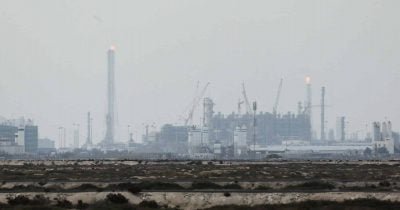
Qatar faces economic crisis as Strait of Hormuz closure halts gas exports
The world’s largest LNG exporter has been offline for nearly two months, and its finance minister says the worst is yet to come.
1 hours ago
Share
Add us on Google
Qatar, responsible for roughly 20% of global liquefied natural gas trade, has seen its exports completely shut down for approximately 60 days. The closure of the Strait of Hormuz, compounded by missile strikes on the Ras Laffan industrial complex, has created what is shaping up to be the most significant energy supply disruption in years.
Qatar’s finance minister, Ali bin Ahmed Al Kuwari, has described the energy price increases seen so far as merely the “tip of the iceberg.” He warned that if disruptions persist, the full-scale macroeconomic impacts will materialize within one to two months.
Ras Laffan is the single largest concentration of LNG production capacity on the planet, handling nearly 20% of global LNG exports on its own. The damage from missile strikes has been severe enough that full restoration timelines are estimated at three to five years.
Advertisement
US LNG exports are already operating near maximum capacity at roughly 18 billion cubic feet per day. There is very little room to ramp up production to offset the loss of Qatar’s output, which means the global gas market is staring at a structural supply deficit with no easy fix.
LNG prices in both Europe and Asia have already surged in response.
Qatar supplies approximately 30% of the global helium market. Helium is a critical input for semiconductor manufacturing, MRI machines, fiber optic cables, and rocket propulsion systems.
With Qatar’s helium exports disrupted alongside its LNG shipments, semiconductor fabs that require helium for cooling and purging processes during chip production face a potential sustained shortage.
A sustained spike in global energy prices raises the cost of mining operations worldwide. Miners operating on thin margins, particularly those in regions dependent on natural gas for electricity generation, face a potential squeeze. Higher energy costs mean lower profitability per hash, which historically leads to consolidation as smaller operators shut down and hash rate concentrates among larger, better-capitalized miners.
If semiconductor production faces constraints, the supply of specialized hardware, including ASICs used in Bitcoin mining and GPUs used in AI compute, could tighten further. That would make new mining equipment harder and more expensive to acquire, creating an additional barrier to hash rate growth.
The three-to-five-year restoration estimate for Qatar’s primary export facility means this is not a temporary inconvenience. Energy markets, commodity markets, and by extension digital asset markets will need to price in this structural shift over time.
Disclosure: This article was edited by Editorial Team. For more information on how we create and review content, see our Editorial Policy.
Here are the four major events likely to matter the most for BTC and the broader crypto market for the week ahead.

Here are the four major events likely to matter the most for BTC and the broader crypto market for the week ahead.

Bitcoin is about to get a major bullish signal it hasn't had in over a year CoinDesk
Ethereum's liquidity challenges could lead to increased market volatility, impacting traders' strategies and potentially amplifying price swings. The post Ethereum surges nearly…