Bitcoin Traders Brace for These 4 Key Macro Events This Week
Here are the four major events likely to matter the most for BTC and the broader crypto market for the week ahead.
Senate Banking Committee advances CLARITY Act in bipartisan vote, reshaping U.S. crypto regulatory framework. Continue reading at DailyCoin.
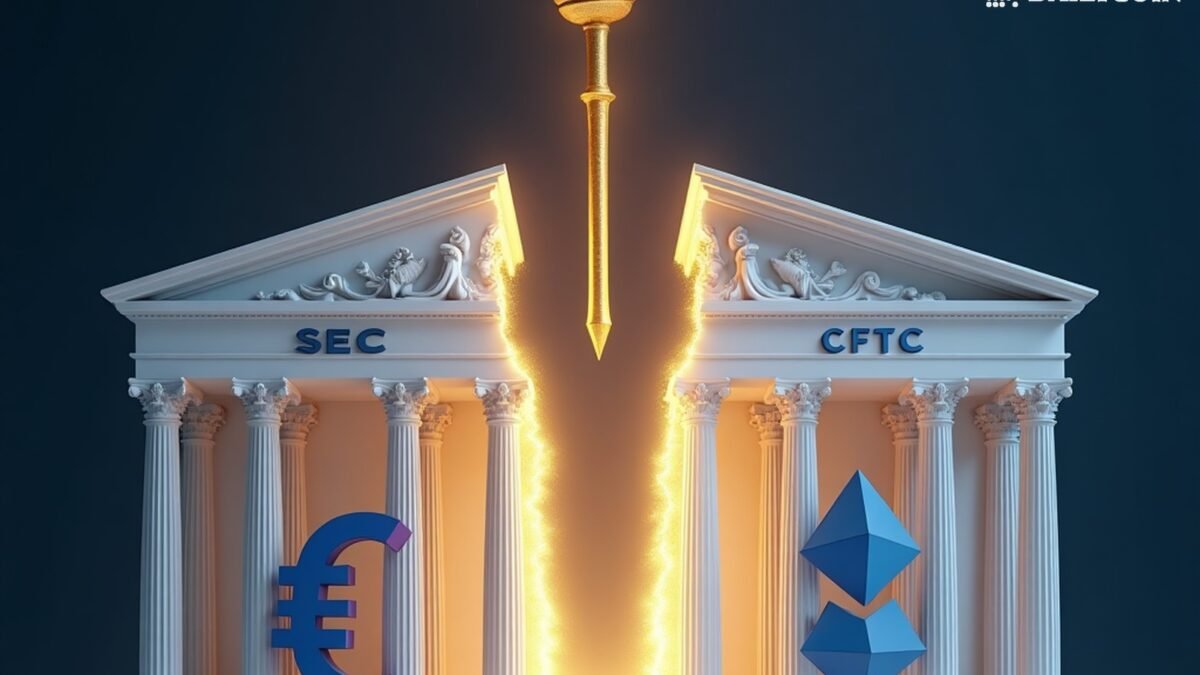
The U.S. Senate Banking Committee voted 15–9 to advance the CLARITY Act, delivering the crypto industry its biggest domestic legislative milestone in years. The bill draws a statutory line between SEC and CFTC jurisdiction over digital assets, resolving a regulatory standoff that has long suppressed institutional participation in U.S. markets. Markets responded sharply: Bitcoin briefly touched $82,000 before pulling back to approximately $80,600, while Coinbase stock surged nearly 8% intraday to around $217 as investors priced in reduced regulatory risk. What the CLARITY Act Would Do The legislation assigns oversight of most digital commodities, including Bitcoin and the majority of altcoins, to the CFTC, while the SEC retains authority over assets classified as digital securities. It also establishes regulatory standards for exchanges, custody providers, and token classification, and includes provisions covering stablecoins and DeFi protocols. Thursday’s vote followed a last-minute bipartisan compromise brokered in the hours before the committee markup. All 13 Republicans voted in favor, joined by Democratic Senators Ruben Gallego of Arizona and Angela Alsobrooks of Maryland. The bill is backed by Coinbase, Ripple, Circle, and Andreessen Horowitz. The White House has also been an active participant in negotiations. Market Reaction: Bitcoin Stability and Coinbase Rally Markets reacted swiftly to the legislative progress. Bitcoin briefly surged toward $82,000, testing its 200-day moving average before easing back to approximately $80,600. Despite the pullback, sentiment remained supported by strong ETF-driven demand, with roughly 1.3 million BTC reportedly held across U.S. spot ETFs. The broader crypto market capitalization rose 0.81% to $2.68 trillion, according to CoinMarketCap data. Meanwhile, Coinbase Global Inc (COIN) shares climbed around 8% intraday to roughly $221. Investors priced in reduced regulatory uncertainty, improved classification clarity, and a higher probability that the CFTC will take the lead role in spot crypto oversight. The move is also expected to support Coinbase’s institutional expansion in custody, staking, and derivatives services. What Comes Next The CLARITY Act now moves to the full Senate, where further debate and potential revisions are expected before any House-Senate reconciliation process. Unresolved ethics provisions, specifically around government officials, including the president, holding or profiting from crypto, remain a key sticking point for Democratic holdouts. Coinbase CEO Brian Armstrong called the committee vote a “historic day for crypto,” while Blockchain Association CEO Summer Mersinger described it as a “defining moment” for the industry. https://twitter.com/brian_armstrong/status/2054992403757666518 Why This Matters The CLARITY Act would end years of jurisdictional ambiguity between the SEC and CFTC, giving exchanges, token issuers, and institutional investors a defined legal framework to operate within the U.S. market. For investors, clearer rules reduce the enforcement risk premium that has historically weighed on crypto valuations and held back large-scale institutional capital. Dig deeper into DailyCoin’s trending crypto scoops today:Hana Bank Invests $669M in Upbit Operator Dunamu: What the Deal SignalsFidelity, DTCC Tap Chainlink in Landmark Week for Tokenized Finance People Also Ask: What is the CLARITY Act? The CLARITY Act is proposed U.S. legislation aimed at defining how digital assets (such as cryptocurrencies and tokens) are regulated. Its core purpose is to clarify when a digital asset is treated as a security versus a commodity, and which regulator has authority over it. Is the CLARITY Act already law? As of now, it is not universally established as law. It is part of ongoing legislative discussions in the U.S. Congress, and its final form (if passed) may change significantly during the legislative process. What problem does the Clarity Act try to solve? It addresses the “regulatory ambiguity” in crypto markets, specifically, whether a token is a security (regulated like stocks) or a commodity (regulated like oil, gold, or Bitcoin in some contexts), and which federal agency has jurisdiction.
Here are the four major events likely to matter the most for BTC and the broader crypto market for the week ahead.

Here are the four major events likely to matter the most for BTC and the broader crypto market for the week ahead.

Bitcoin is about to get a major bullish signal it hasn't had in over a year CoinDesk
Ethereum's liquidity challenges could lead to increased market volatility, impacting traders' strategies and potentially amplifying price swings. The post Ethereum surges nearly…