Tether Pushes Into Artificial Intelligence as User Base Tops 650M
Tether is expanding into artificial intelligence as it looks to build on a global user base of more than 650 million. CEO…

Coinbase's S&P 500 inclusion signifies crypto's mainstream acceptance, impacting passive investments and potentially boosting industry confidence. The post Coinbase celebrates three-year anniversary of SEC lawsuit as an S&P 500 company…
Coinbase celebrates three-year anniversary of SEC lawsuit as an S&P 500 company
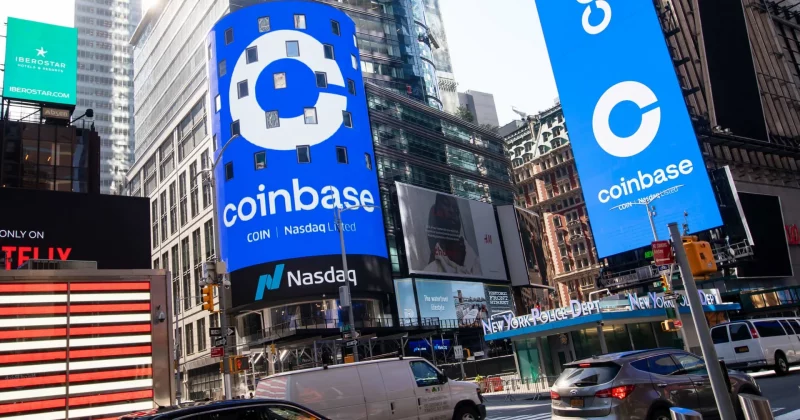
The exchange went from facing existential regulatory threat to becoming the first crypto-native firm in America’s most prestigious stock index.
Just now ago
Share
Add us on Google
Three years ago, on June 6, 2023, the SEC dropped a lawsuit on Coinbase that looked like it could fundamentally reshape the company’s future. The agency accused it of operating as an unregistered national securities exchange, broker, and clearing agency, while also taking aim at its staking offerings.
Fast forward to today, and Coinbase is marking that anniversary from a rather different position: as a member of the S&P 500.
Coinbase officially joined the S&P 500 on May 19, 2025, after the announcement dropped on May 12. It replaced Discover Financial Services, which was being absorbed by Capital One’s acquisition.
The inclusion made Coinbase the first crypto-native company to crack America’s flagship stock index. The S&P 500 is the benchmark that trillions of dollars in passive investment track. Getting in means index funds, ETFs, and retirement accounts across the country now hold COIN whether individual investors chose it or not.
Advertisement
COIN shares surged approximately 24% on the day of the announcement alone. Coinbase became the top-performing constituent of the S&P 500 in June 2025, outpacing every other company in the index.
CEO Brian Armstrong framed the milestone as evidence that digital assets are achieving mainstream acceptance.
The SEC’s case against Coinbase challenged the company’s core business model. The agency argued that Coinbase was functioning as an exchange, broker, and clearing agency without proper registration. It also targeted the company’s staking-as-a-service product.
When the SEC finally dismissed the case voluntarily in February 2025, the company estimated it would save over $50 million annually in legal costs.
That said, Coinbase isn’t completely out of the regulatory woods. Chief Legal Officer Paul Grewal has pointed to a separate ongoing SEC investigation, which he described as a lingering probe from the previous administration.
Passive index funds tracking the S&P 500 were forced to buy COIN shares to maintain their replication of the index. Every 401(k) with an S&P 500 index fund now has crypto exposure, whether the account holder realizes it or not.
Grewal’s characterization of the ongoing investigation as a holdover from the previous administration suggests Coinbase views it as a legacy issue rather than a fresh threat.
The $50 million in annual legal cost savings is also worth noting. That capital can now flow into product expansion, international growth, or margin improvement.
Disclosure: This article was edited by Editorial Team. For more information on how we create and review content, see our Editorial Policy.
Tether is expanding into artificial intelligence as it looks to build on a global user base of more than 650 million. CEO…

Prime Minister Andy Burnham says his government intends to revoke the Gambling Act’s “aim to permit” duty, the statutory presumption that has…


Crypto lending contracts gradually as stablecoin activity stays elevated and Aave signals renewed borrowing demand.

Nillion's integration with Chainlink's CCIP enhances token liquidity and trading opportunities, potentially boosting its market presence and adoption. The post Nillion rises…