Quant crypto hits 4-month high – Why QNT bulls are eyeing $85
Quant broke out of a multi-month descending channel, and climbed to a four-month high of $76.

France's diplomatic efforts to reopen the Strait of Hormuz could stabilize global energy markets, impacting economies reliant on oil. The post France prioritizes reopening of Hormuz Strait, Macron tells UN…
<!– Headline – top left. Not an : the mobile layout above already
renders the real for this article; this is its desktop-width
visual restyle, kept out of the heading outline so the page has
exactly one regardless of viewport (CB-16). –>
France prioritizes reopening of Hormuz Strait, Macron tells UN
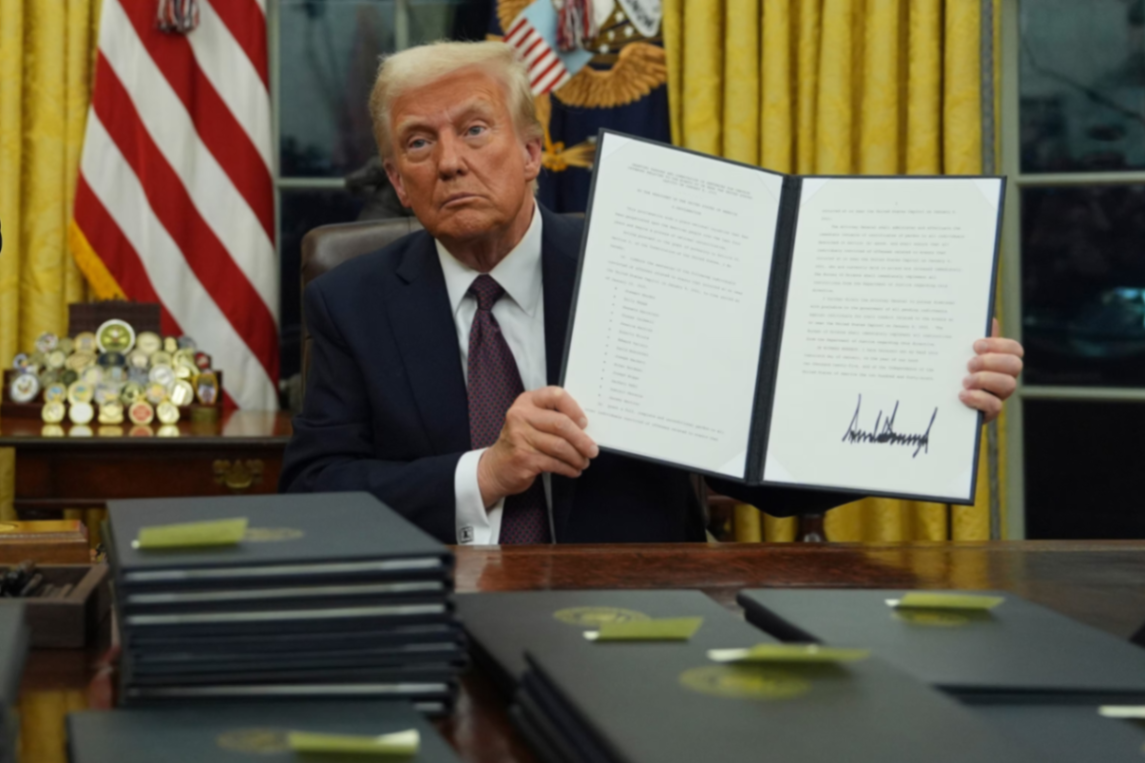
Macron builds a coalition of roughly 50 countries to restore freedom of navigation through the world’s most important oil chokepoint
Sep. 23, 2026
Share
Add us on Google
France is leading the charge to reopen the Strait of Hormuz, the narrow waterway through which roughly 20% of the world’s oil supply flows. President Emmanuel Macron told the UN General Assembly in September 2026 that restoring navigation through the strait is a “cardinal principle of international law,” framing the crisis as one that extends far beyond the Middle East and into every economy that depends on stable energy prices.
France’s diplomatic push has been building for months. An international summit on April 17, 2026, brought together approximately 50 to 51 countries, all calling for the immediate reopening of the strait. The coalition has proposed a multinational maritime mission focused strictly on defensive operations, contingent on a sustainable ceasefire being in place first.
Advertisement
Macron has consistently ruled out any forced reopening of the strait while active hostilities continue, a position he staked out publicly as early as March 2026. In practical terms, that means France’s Charles de Gaulle carrier group, which can deploy within days, stays parked until diplomacy clears a path.
Macron’s address to the UN reinforced this framework. The reopening of the strait, he argued, is essential for easing global energy market tensions.
Daily. Free. Join 34,000+ readers across crypto, finance, and policy.
We respect your privacy. Unsubscribe anytime.
The Strait of Hormuz sits between Iran and Oman, connecting the Persian Gulf to the Gulf of Oman and the open ocean beyond. Iran’s blockade, which began following a sharp escalation in hostilities around February 2026 triggered by heightened U.S.-Israel military actions against Iranian positions, has already injected significant volatility into oil prices.
France has deepened its strategic partnerships with Gulf monarchies in recent years, and the Hormuz crisis has accelerated that alignment. The coordinated engagement with the United States adds another layer of seriousness to the diplomatic effort. France’s insistence on multilateralism reflects its positioning as a neutral facilitator advocating for protective measures rather than military intervention, with diplomatic negotiations with Iran required before any naval assets are deployed.
The trajectory of these negotiations has direct implications for global energy markets. Any breakthrough that leads to even a partial reopening of the strait would likely trigger a significant repricing in oil futures, potentially unwinding the risk premium that has built up during months of blockade. Industries downstream from energy, including manufacturing, logistics, and petrochemicals, are watching these developments closely.
Disclosure: This article was edited by Editorial Team. For more information on how we create and review content, see our Editorial Policy.
Quant broke out of a multi-month descending channel, and climbed to a four-month high of $76.
AT&T's shift to fiber and automation may streamline operations and cut costs, but it risks workforce displacement and faces execution challenges. The…
Michael Selig said tokenization could reshape financial markets as the CFTC and SEC continue advancing onchain initiatives despite the CLARITY Act setback.

PONS crypto is at crosshairs with building price momentum but weakening fundamentals