S&P Global Targets $10B Blockchain Lending Market With New Risk Tool
S&P’s Vault Risk Assessment weighs six risks in DeFi lending as vault deposits reach $10 billion, but it is not a credit…
Hyperliquid's advocacy for onchain derivatives regulation could reshape financial transparency and challenge traditional market structures. The post Hyperliquid discusses onchain derivatives regulation with US policymakers appeared first on Crypto Briefing.
Hyperliquid discusses onchain derivatives regulation with US policymakers
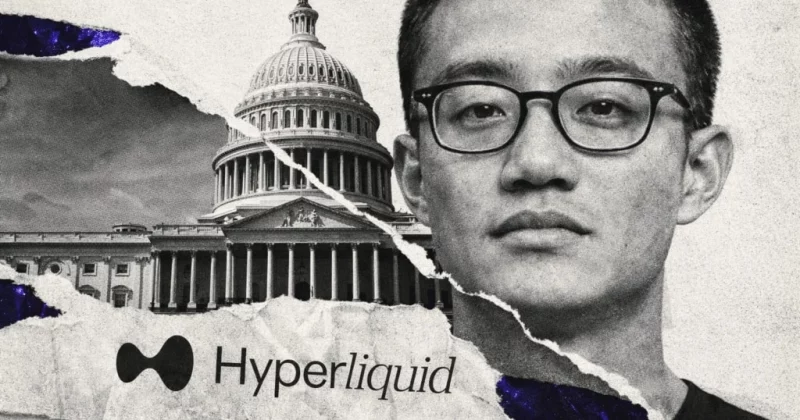
The decentralized exchange’s co-founder Jeff Yan met with legislators to push for including onchain derivatives markets in the CLARITY Act framework.
1 hours ago
Share
Add us on Google
Hyperliquid is going to Washington. Co-founder Jeff Yan met with US policymakers to advocate for onchain derivatives markets being folded into the country’s evolving regulatory framework, with conversations centering on the CLARITY Act.
The meetings focused on the technical mechanics of how onchain trading actually works, essentially a policy education effort aimed at legislators.
Advertisement
Hyperliquid established the Hyperliquid Policy Center in Washington on February 18, led by Jake Chervinsky. Chervinsky previously served as chief policy officer at the Blockchain Association.
The policy center’s mandate goes beyond just meeting with legislators. It’s positioning itself as a bridge between the world of DeFi trading and the traditional regulatory apparatus.
The CLARITY Act has become a focal point for these discussions. There’s a belief within Hyperliquid’s team that a genuine policy window exists right now for integrating onchain derivatives trading into the US regulatory structure.
Part of the Hyperliquid Policy Center’s work involves addressing criticisms from traditional exchanges. Names like CME and ICE, the incumbents of the derivatives world, have been vocal about the risks of unregulated crypto trading venues.
Hyperliquid’s counter-argument is that onchain markets actually offer improved transparency compared to their traditional counterparts. Every trade, every order, every liquidation on a blockchain-based system is publicly verifiable.
Disclosure: This article was edited by Editorial Team. For more information on how we create and review content, see our Editorial Policy.
S&P’s Vault Risk Assessment weighs six risks in DeFi lending as vault deposits reach $10 billion, but it is not a credit…

S&P’s Vault Risk Assessment weighs six risks in DeFi lending as vault deposits reach $10 billion, but it is not a credit…

The stock trading platform seeks to offer tokenized shares in more than 60 US-listed companies under the SEC’s recently introduced innovation exemption.

Tokenized stocks market supply is at $3.2B and projected to hit $2T by 2028-2030.