Japan Exchange Group CEO sees limited impact from AI stock selloff
Japan's resilience amid AI stock volatility highlights its potential as a diversification strategy, contrasting with US tech market dependency. The post Japan…
Nvidia's sustained demand for memory chips amid AI growth suggests prolonged high prices, benefiting suppliers but challenging broader tech sectors. The post Nvidia CEO Jensen Huang sees no sign of…

<!– Headline – top left. Not an : the mobile layout above already
renders the real for this article; this is its desktop-width
visual restyle, kept out of the heading outline so the page has
exactly one regardless of viewport (CB-16). –>
Nvidia CEO Jensen Huang sees no sign of a memory glut by 2029
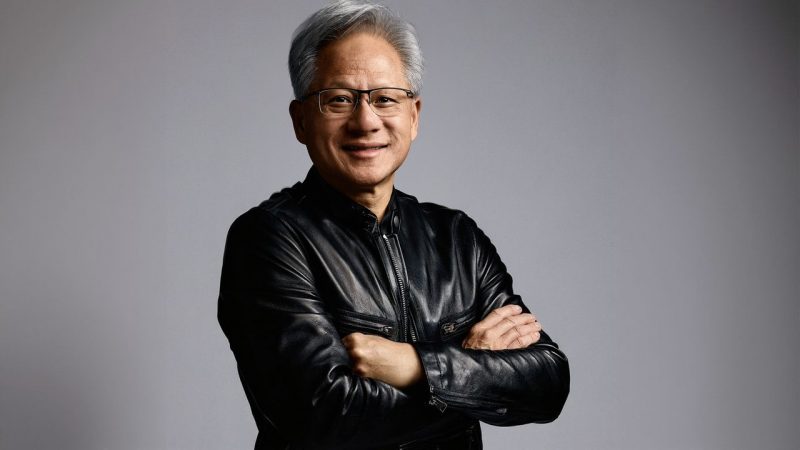
Huang says memory demand will keep growing as AI pushes high-bandwidth memory and LPDDR into the center of the chip supply story
Oct. 22, 2026
Share
Add us on Google
NVIDIA official newsroom (nvidianews.nvidia.com/bios/jensen-huang)
Nvidia CEO Jensen Huang has a message for anyone waiting on a memory chip oversupply: don’t hold your breath.
In a CNBC interview on October 22, 2026, Huang said he sees no sign of a memory glut by 2029. He also said demand for memory will keep climbing.
Huang’s comments centered on two types of memory: high-bandwidth memory, known as HBM, and LPDDR. He stressed that both are becoming more important as AI workloads grow.
Huang tied the rising reliance on these technologies to the surge in AI development. His view pushes back on speculation that the market could swing from shortage to oversupply within a few years.
Advertisement
In its second quarter of fiscal 2027, Nvidia reported total revenue of $96.2 billion. That was a 106% increase from a year earlier.
Data center revenue, the segment most tied to AI, reached $89 billion. That figure was up 117% year over year.
Daily. Free. Join 34,000+ readers across crypto, finance, and policy.
We respect your privacy. Unsubscribe anytime.
Nvidia’s purchase commitments hit $279 billion in Q2 fiscal 2027, more than double the prior quarter. A considerable portion of that went toward memory supplies. Nvidia has been securing long-term agreements with memory suppliers to work around the bottleneck.
Chief Financial Officer Colette Kress has said Nvidia expects memory supply constraints to act as a brake on growth at least until January 2028, which marks the end of fiscal 2028.
Earlier in 2026, Huang warned of shortages across the semiconductor supply chain, including wafers and packaging. He said those constraints could affect the market for several years, driven by AI demand. HBM in particular has been a pressure point, with Nvidia suggesting the tightness in that market will persist through at least the end of fiscal 2028.
The most obvious beneficiaries of Huang’s outlook would be memory makers such as SK Hynix and Micron. If scarcity continues and Nvidia keeps writing large checks, those suppliers could see profit margins expand as elevated memory prices persist.
Commitments of $279 billion in a single quarter are a large bet on continued demand. The company posted 106% annual revenue growth while saying supply was holding it back, raising the question of what growth might look like if the bottleneck eased.
Disclosure: This article was edited by Diego Almada Lopez. For more information on how we create and review content, see our Editorial Policy.
Japan's resilience amid AI stock volatility highlights its potential as a diversification strategy, contrasting with US tech market dependency. The post Japan…

Japan's resilience amid AI stock volatility highlights its potential as a diversification strategy, contrasting with US tech market dependency. The post Japan…

Alexandr Wang, Meta’s chief AI officer, warned on Sunday that superintelligence is arriving. He built the case on a proof of the…
AI's potential to compromise nuclear systems underscores the urgent need for robust human oversight and international cooperation to prevent escalation. The post…