Kalshi requests CFTC approval for margin trading on platform
Kalshi's margin trading proposal could reshape prediction markets by enhancing capital efficiency, potentially intensifying competition and regulatory scrutiny. The post Kalshi requests…
The high cost of AI infrastructure highlights the need for strategic investment and international collaboration to sustain technological competitiveness. The post Nvidia’s Jensen Huang tells G20 ministers AI infrastructure could…
<!– Headline – top left. Not an : the mobile layout above already
renders the real for this article; this is its desktop-width
visual restyle, kept out of the heading outline so the page has
exactly one regardless of viewport (CB-16). –>
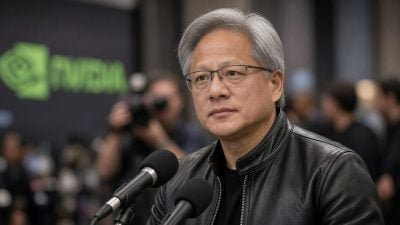
Nvidia’s Jensen Huang tells G20 ministers AI infrastructure could cost $50B–$60B per gigawatt
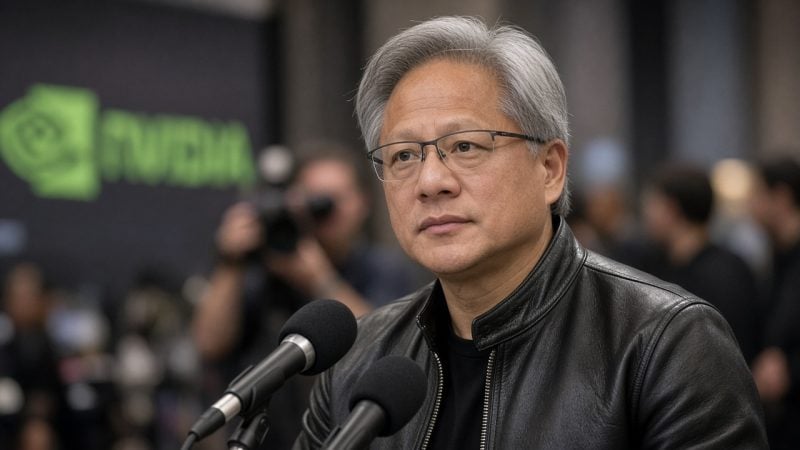
The G20 Innovation Ministerial in Chapel Hill produced consensus on pro-innovation AI policies but no binding funding commitments
Sep. 22, 2026
Share
Add us on Google
Jensen Huang walked into a room full of G20 innovation ministers and made a pitch that would make utility executives blush. The Nvidia CEO told officials gathered in Chapel Hill, North Carolina that building a single gigawatt of AI computing infrastructure would run somewhere between $50 billion and $60 billion.
For context, one gigawatt is roughly the power output of a large nuclear plant. Huang’s message was clear: if countries want to compete in the AI race, they need to start thinking about compute capacity the same way they think about roads, water systems, and the electrical grid.
The G20 Innovation Ministerial, held September 1-2, 2026, was co-hosted by the US Department of Commerce and the White House Office of Science and Technology Policy. It brought together innovation ministers from G20 member states alongside a roster of tech executives that read like a who’s-who of the AI industry, including OpenAI’s Sam Altman and Anthropic’s Tom Brown.
The group landed on two headline deliverables: the Carolina Principles for Emerging Technologies and the AI Prosperity Objectives Compact. Both documents center on four pillars: boosting research investment, promoting commercialization, fostering trusted adoption of AI tools, and strengthening public-private partnerships.
Advertisement
A consensus statement emerged, but no formal funding commitments were made, and no specific enforcement mechanisms were outlined.
The US delegation pushed a notably hands-off regulatory posture, arguing against preemptive rules targeting “theoretical” harms from AI. The preferred framing: accelerate adoption first, regulate observable problems later. That stance is expected to carry through to the G20 leaders’ summit scheduled for Miami in December 2026.
Daily. Free. Join 34,000+ readers across crypto, finance, and policy.
We respect your privacy. Unsubscribe anytime.
Huang’s core argument went beyond the usual “AI is important” platitudes. He framed AI infrastructure as something that needs to be durable, fungible, and software-upgradeable.
Durable means built to last through multiple generations of AI models rather than becoming obsolete every 18 months. Fungible means the compute resources should be flexible enough to run different types of workloads, not locked into one architecture. Software-upgradeable means the physical hardware should be designed to improve through software updates, extending its useful life without full replacement.
Altman and Brown reportedly echoed the urgency around infrastructure buildout and cross-border collaboration, though the spotlight landed squarely on Huang’s cost projections.
The consensus statement’s pillars, including pro-innovation technology policies, workforce development, intellectual property frameworks for AI, standards harmonization, and supply-chain resilience, represent a broad wish list.
The IP framework discussion also carries significant stakes. How countries handle training data rights, model outputs, and derivative works will shape which companies can operate across borders and which face regulatory walls. The Carolina Principles appear to favor innovation-friendly IP treatment, but the devil lives in implementation at the national level.
Disclosure: This article was edited by Editorial Team. For more information on how we create and review content, see our Editorial Policy.
Kalshi's margin trading proposal could reshape prediction markets by enhancing capital efficiency, potentially intensifying competition and regulatory scrutiny. The post Kalshi requests…

The ECB and 27 EU central banks urge Brussels to scrap the MiCA bank-deposit rule Tether refused to accept. The post Tether…
Eligible U.S. users can request Oura shares at the offer price, but allocations remain limited and early exits may restrict future access.…

TL;DR Coincheck Group disclosed that Executive Chairperson Takashi Oyagi resigned effective September 21. The company said the resignation was for personal reasons.…