Trump-Xi Polymarket Odds for Handshake Hit 50%
Handshake odds on Polymarket put a 10-15 second Trump-Xi greeting at 50%, while hug and kiss contracts trail at 5% and 1%,…
The rebound in the non-manufacturing index suggests resilience in the services sector, potentially influencing Federal Reserve policy decisions. The post Philadelphia Fed non-manufacturing index swings to 22 in September after…
<!– Headline – top left. Not an : the mobile layout above already
renders the real for this article; this is its desktop-width
visual restyle, kept out of the heading outline so the page has
exactly one regardless of viewport (CB-16). –>
Philadelphia Fed non-manufacturing index swings to 22 in September after negative August reading
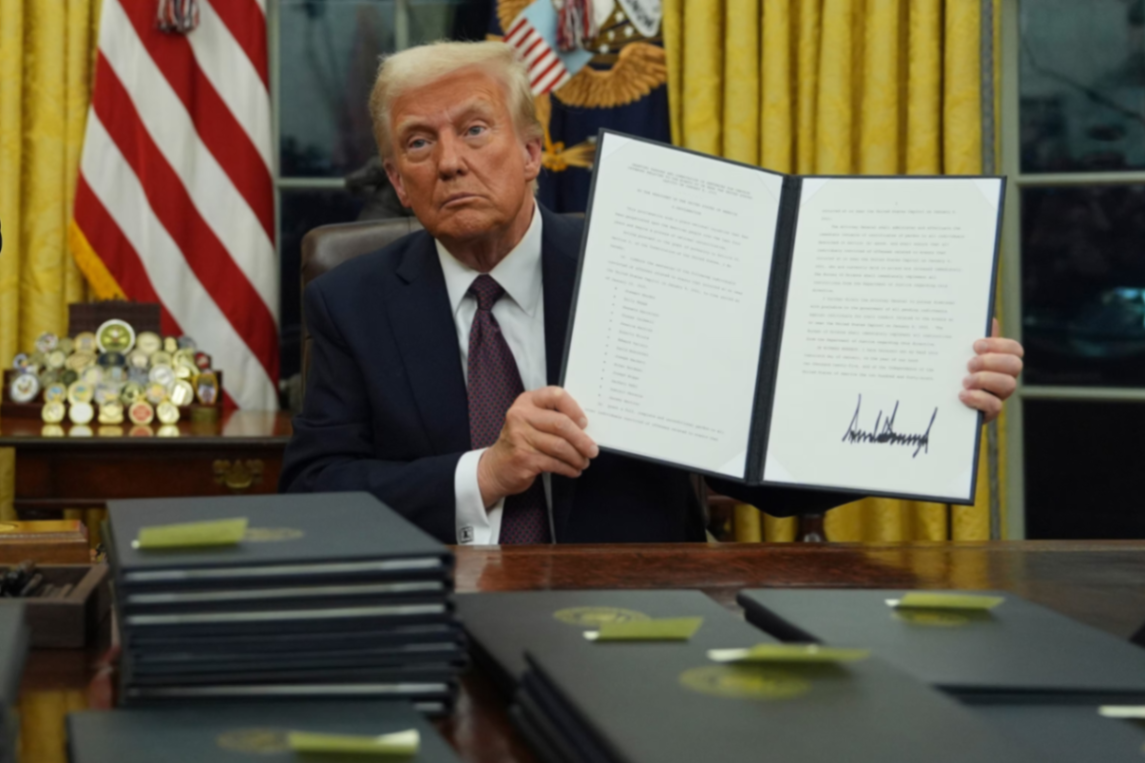
The services sector gauge staged a dramatic turnaround from -8.2 the prior month, signaling renewed optimism among regional businesses.
Sep. 22, 2026
Share
Add us on Google
The Philadelphia Fed’s Nonmanufacturing Business Outlook Survey landed at 22.0 for September, a sharp reversal from August’s -8.2 reading.
To put that swing in context: a diffusion index above zero means more firms are reporting expansion than contraction. Moving from negative territory to 22.0 in a single month suggests that whatever was spooking services-sector businesses in August didn’t stick around for long.
The Nonmanufacturing Business Outlook Survey, or NBOS, tracks firms across Delaware, southern New Jersey, and eastern and central Pennsylvania. These are companies outside the manufacturing world: think healthcare providers, retailers, logistics firms, restaurants, and professional services.
Advertisement
The survey has been running monthly since 2011, making it a well-established barometer for regional economic health in the services sector. Its diffusion indexes capture changes in general activity, new orders, sales, employment, and prices at the firm level.
September’s 22.0 reading follows a volatile stretch. July came in at 17.5, which looked solid. Then August cratered to -8.2, raising questions about whether the services economy was hitting a wall. September’s number essentially answers that question with a firm “no.”
Daily. Free. Join 34,000+ readers across crypto, finance, and policy.
We respect your privacy. Unsubscribe anytime.
The Philadelphia Fed’s manufacturing survey has been a market staple for decades. Its nonmanufacturing counterpart carries similar weight for the services sector, which accounts for a far larger share of the US economy than manufacturing does.
The timing of this release adds another layer of significance. The Federal Reserve is navigating a delicate period of monetary policy calibration, and incoming data on business sentiment directly influences how policymakers think about the trajectory of interest rates. A strong services reading reduces the urgency for additional monetary easing, while a weak one does the opposite.
The headline number is encouraging, but the specific breakdown of components, including new orders, employment, and prices paid, will matter more for understanding the quality of this recovery. The research notes that the specific breakdown of components has not yet been disclosed in detail, limiting insights into individual factors contributing to the rise.
Still, 22.0 is a meaningfully positive number. It suggests that a majority of nonmanufacturing firms in the region are seeing conditions improve, not just stabilize. Combined with July’s 17.5 reading, it paints a picture of a services sector that stumbled in August but didn’t fall.
Disclosure: This article was edited by Editorial Team. For more information on how we create and review content, see our Editorial Policy.
Handshake odds on Polymarket put a 10-15 second Trump-Xi greeting at 50%, while hug and kiss contracts trail at 5% and 1%,…

Animoca Brands suspended its reverse merger talks with Currenc but said it remains committed to pursuing a listing on a major exchange.

TL;DR The ECB has started preparatory work to invest a small portion of its own-funds portfolio in tokenized euro-denominated securities. Initial eligible…

Sanctioning the ICC could strain international relations, challenge global justice efforts, and pressure member states to reassess their commitments. The post Trump…