Iowa’s rising cancer rates central to Senate race as midterms approach
The focus on healthcare and pollution in Iowa's Senate race may shift voter priorities, impacting election outcomes and market dynamics. The post…
Tether’s faces rising scrutiny as Iran-linked activity and faster payment infrastructure expand compliance challenges.
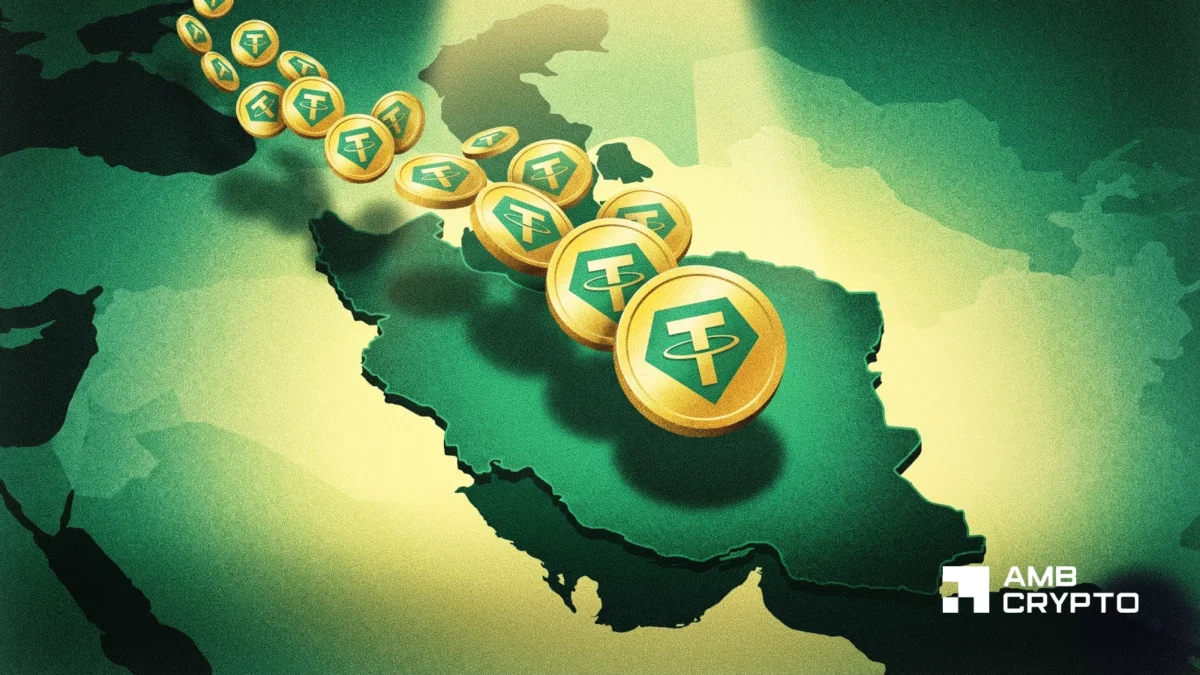
Tether is expanding its role in financial enforcement by working with governments to freeze funds suspected of being linked to illicit activity. Tether stated that they froze approximately $550 million in Iranian-linked Tether [USDT] at the request of a U.S. agency. Tether’s CEO, Paolo Ardoino, defended the company’s stance, stating, Public blockchains provide visibility for investigators where cash does not. He further clarified that Tether will assist law enforcement whenever provided with “credible information” to freeze assets. Notably, the continued growth in USDT usage raises the risk of increased regulation of Tether. So the question is: Does USDT’s massive $4.4 trillion dollar transaction volume in Q4 2025 indicate an increase in Tether’s capacity to identify and freeze suspect illicit transactions? USDT becomes Iran’s shadow banking rail That importance increases even more when looking at where USDT is really being moved in other Iran-related financial networks. The Senate report found that 84% of 846 sanctioned or seizure-targeted wallets use USDT as their main currency. The heavy USDT activity across these wallets shows how deeply Iran’s shadow banking system relies on the stablecoin. Additionally, the investigators were able to trace over $600 million in USDT from two sanctioned Iranian oil smugglers through their accounts in 2021-2025. These transactions tied Iranian banks directly to Hizballah’s and the Houthis’ associated financial networks. These findings show that USDT’s involvement may be going beyond individual sanctions violations and could be a part of larger cross-border settlements. StableChain brings compliance into focus StableChain’s ability to help ease the scalability of USDT may increase the burden on compliance systems. With a fast 0.7-second finality as well as guaranteed block space, it provides an environment for users to transfer money rapidly at a high volume, especially when networks are congested. The target from the August update is 10,000 transactions per second, creating capacity for much larger payment flows. Faster, denser activity means monitoring systems have less time to detect suspicious movements before illicit actors move the funds. Therefore, Tether’s issuer-level controls remain the main intervention point, since the network itself does not replace wallet screening or sanctions enforcement. Moreover, StableChain’s compliance impact will depend on how closely transaction monitoring, sanctions data, and Tether’s freeze mechanisms keep pace with higher payment throughput. Final Summary Tether is deeply embedded in Iran-linked financial flows, making targeted freezes central to enforcement. StableChain could scale USDT payments while putting greater pressure on real-time compliance.
The focus on healthcare and pollution in Iowa's Senate race may shift voter priorities, impacting election outcomes and market dynamics. The post…

The focus on healthcare and pollution in Iowa's Senate race may shift voter priorities, impacting election outcomes and market dynamics. The post…

An optional required verifier can hold up destination tokens after a source-chain lock or burn; named production use remains unverified. The post…

Brazil banned sports betting and online casino games on Sept. 25, nine days before the first round of its presidential election. The…
