XRP Price Prediction: Analyst Calls $750 Ripple Next Year
XRP trades near $1.51 as resistance at $1.52–$1.56 caps price. Claver maintains a $10,000 forecast, but the near-term chart remains range-bound. The…
The drone attack on Barakah underscores the vulnerability of critical infrastructure, prompting regional diplomatic efforts to bolster security. The post UAE foreign minister holds calls with regional counterparts after drone…
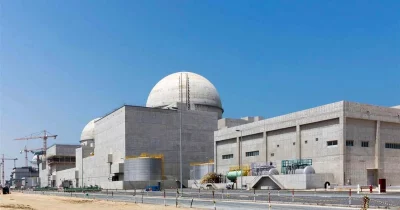
UAE foreign minister holds calls with regional counterparts after drone attack on Barakah nuclear plant
Sheikh Abdullah bin Zayed Al Nahyan condemned the strike on the Arab world’s first operational nuclear facility as a ‘blatant violation of international law’ and engaged global leaders on the escalating threat.
Just now ago
Share
Add us on Google
A drone struck near the Barakah Nuclear Power Plant in the UAE, hitting an external generator and sparking a fire. No injuries were reported, and UAE officials confirmed there were no radiological safety concerns.
UAE Foreign Minister Sheikh Abdullah bin Zayed Al Nahyan launched diplomatic calls with regional counterparts, including Saudi Arabia, Egypt, and the UK, to discuss the incident and its implications for regional stability.
The Barakah Nuclear Power Plant is the first operational nuclear facility in the Arab world. It sits on the Gulf coast in Abu Dhabi’s western region and is central to the UAE’s broader energy diversification strategy.
Advertisement
The drone attack caused a fire in an external generator but did not damage the plant’s core infrastructure. UAE officials were quick to clarify that radiation safety was never compromised.
Sheikh Abdullah condemned the strike as a blatant violation of international law. He described the targeting of civilian infrastructure as unacceptable and affirmed the UAE’s right to respond. The foreign minister also initiated conversations with the International Atomic Energy Agency (IAEA) to address the incident within the framework of international nuclear safety protocols.
The UAE is not treating this as an isolated event. Officials pointed to a much larger pattern, stating that Iran has launched over 2,800 missile and drone attacks against the UAE. The government has classified these as unprovoked terrorist actions.
Sheikh Abdullah’s diplomatic outreach extended well beyond the Gulf. Calls with Egyptian and British foreign ministers indicate the UAE is building a broad coalition of concern. The inclusion of the IAEA in these discussions further internationalizes the incident, pulling it into the orbit of nuclear nonproliferation and safety governance.
The Barakah plant represents something bigger than electricity generation. It is a symbol of the UAE’s post-oil future. The facility was designed to supply a meaningful portion of the country’s energy needs through clean nuclear power, reducing dependence on hydrocarbons.
Drone warfare has been reshaping Middle Eastern security calculations for years. The 2019 attacks on Saudi Aramco’s Abqaiq and Khurais oil processing facilities temporarily knocked out roughly half of Saudi Arabia’s oil output and sent global energy markets into a tailspin. The Barakah incident sits in that same category of asymmetric threats, where relatively cheap unmanned systems can target enormously valuable infrastructure.
Disclosure: This article was edited by Editorial Team. For more information on how we create and review content, see our Editorial Policy.
XRP trades near $1.51 as resistance at $1.52–$1.56 caps price. Claver maintains a $10,000 forecast, but the near-term chart remains range-bound. The…

XRP trades near $1.51 as resistance at $1.52–$1.56 caps price. Claver maintains a $10,000 forecast, but the near-term chart remains range-bound. The…

The escalating costs of AI training could lead to industry consolidation, limiting competition to a few major players, while cheaper inference may…

The escalating costs of AI training could lead to industry consolidation, limiting competition to a few major players, while cheaper inference may…