HTX Ventures Publishes New Report on the Convergence of CeFi, DeFi, and TradFi
HTX Ventures, the global investment arm of HTX, has published a new report titled The Convergence of CeFi, DeFi, and TradFi in…
Public-key encryption protects websites, secure messaging, privacy systems, VPNs, and traditional financial networks.
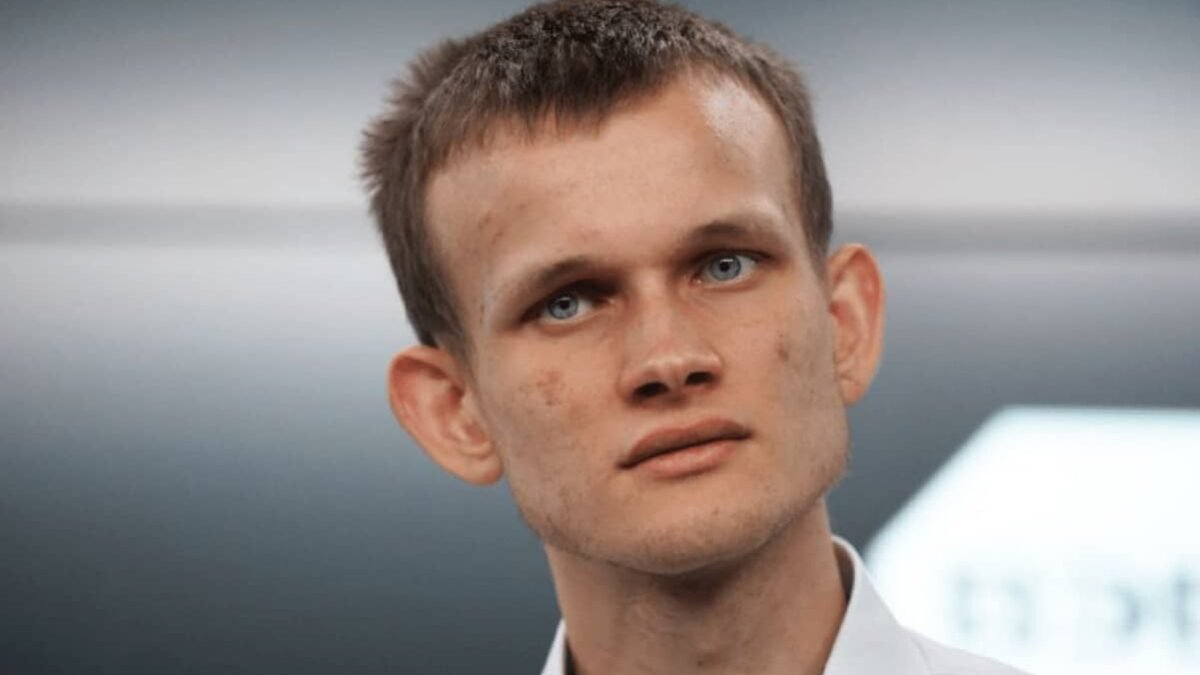
Vitalik Buterin has warned that rapid advances in AI-assisted mathematics could make ECDSA and other structured cryptographic systems less secure sooner than expected, while cautioning users against rushing into wallet migration.
His argument goes beyond quantum computing, raising the possibility that AI could find mathematical shortcuts that humans have missed for decades.
In a post responding to a call from Ethereum researcher Justin Drake for the industry to prepare for “bunker mode,” Buterin argued that AI-driven advances in mathematics deserve more attention.
Drake had urged large holders to consider moving funds to fresh addresses whose public keys remain hidden behind hashes, arguing that ECDSA could theoretically be broken in months rather than years.
Buterin stopped short of that timeline. He wrote that users should not “scramble to move their funds to new wallets today,” but added that the industry should reduce exposure to both quantum-vulnerable and potentially AI-vulnerable cryptography.
His concern extends to lattice-based systems used in areas such as ML-DSA and fully homomorphic encryption. Buterin argued that humans may have missed mathematical shortcuts that AI systems could discover, much as decades of work improved factoring methods beyond the naive assumptions about how difficult the problem was.
That possibility is part of why Ethereum’s lean roadmap has favored hash-based cryptography, he explained. The proposed approach avoids lattices, ML-DSA, Falcon and lattice-based commitments in zero-knowledge proofs where alternatives exist. Buterin considers hash-based signatures such as WOTS and SPHINCS- to be preferable when they can do the job.
But the Ethereum co-founder also mentioned that the issue goes far beyond blockchains. Public-key encryption is still required for communications, privacy networks, websites, and VPNs and cannot just be replaced by hashes. With regard to systems based on solving mathematical puzzles, he has suggested that at some point larger keys might be necessary.
Drake’s warning has drawn direct criticism, with Yehuda Lindell, head of cryptography at Coinbase, contending that there is “no evidence whatsoever” that decades-old assumptions behind elliptic-curve cryptography are close to failing.
Lindell also rejected the idea that recent AI mathematical achievements provide evidence against ECDSA. If elliptic-curve cryptography were suddenly broken, the consequences would extend well beyond crypto wallets, potentially affecting digital certificates, banking software and other systems that depend on public-key cryptography.
Buterin’s own advice is notably less alarmist than Drake’s proposal. For multisig wallets, he initially suggested gathering confirmations offchain so signer keys remain hidden, then corrected himself to recommend that each signer change keys after every operation. He also warned that rushed migrations can cause losses, noting that botched migrations had cost him more money than all hacks combined.
HTX Ventures, the global investment arm of HTX, has published a new report titled The Convergence of CeFi, DeFi, and TradFi in…

Greece's crypto tax framework enhances predictability for investors, aligning with EU standards and potentially influencing broader EU policies. The post Greece plans…
Greece's crypto tax framework enhances predictability for investors, aligning with EU standards and potentially influencing broader EU policies. The post Greece plans…
Ethereum co-founder Vitalik Buterin warned on Thursday that AI-accelerated maths could weaken lattice-based cryptography, including schemes considered quantum-resistant, within two years. He…