Kraken Parent Integrates SGB Net for Instant Settlement for Digital Asset Trades
Kraken crypto exchange’s parent firm Payward has integrated Singapore Gulf Bank’s SGB Net, bringing always-on settlement to institutional digital asset markets. The…
SoftBank's AI investments face heightened scrutiny, potentially impacting its financial stability and influencing broader AI market valuations. The post SoftBank’s AI funding plans face scrutiny at earnings report appeared first…

SoftBank’s AI funding plans face scrutiny at earnings report
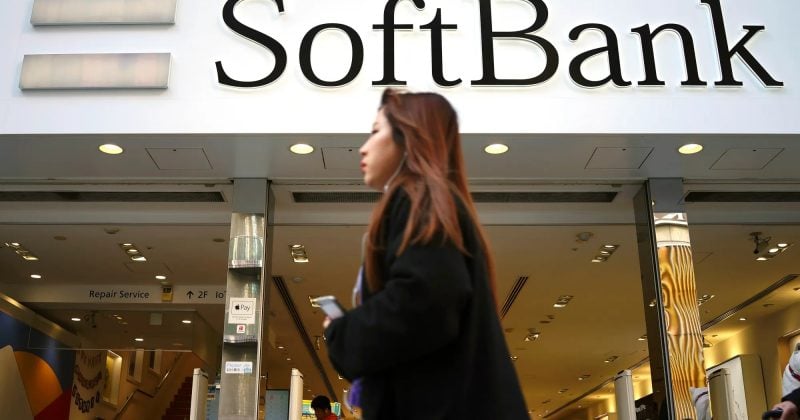
With $30 billion in obligations due later this year and shares down nearly 50%, SoftBank’s August earnings call has a lot of explaining to do
Aug. 4, 2026
Share
Add us on Google
Via thehill.com
SoftBank Group built its reputation on making enormous, sometimes audacious bets. The upcoming Q1 FY2026 earnings report, expected around August 6, is a moment where that confidence gets stress-tested against the balance sheet.
The company has committed over $60 billion to OpenAI and related AI infrastructure. That number is now the centerpiece of every analyst question SoftBank will face.
SoftBank is expected to report a net profit of approximately 148.4 billion yen, or about $941 million, for the quarter.
The firm faces $30 billion in financial obligations due in the second half of 2026. That is a hard deadline, not a forecast, and it is concentrating minds across the investment community.
Advertisement
SoftBank stock has dropped nearly 50% since early June 2026. The company’s credit default swap costs have also climbed, meaning the market is charging more to insure against SoftBank defaulting.
SoftBank maintains a self-imposed loan-to-value limit of 25%, a rule it set to reassure creditors.
SoftBank’s ownership in OpenAI has reached around 11% following more than $30 billion in investments.
To fund that commitment, SoftBank has been selling assets. In October 2025, the company sold its entire Nvidia stake for $5.8 billion. It has also moved portions of its T-Mobile holdings to raise capital.
At one point, SoftBank tried to raise loans using its OpenAI stake as collateral. Lenders declined. Their concern was not SoftBank specifically but the broader anxiety about AI asset valuations and how competitive pressures might erode them over time.
SoftBank has previously reported record profits partly because of valuation gains attributed to OpenAI. Those paper gains become complicated when the same asset is also serving as the implicit backstop for $30 billion in obligations.
S&P Global revised its outlook on SoftBank from negative to stable in July 2026. The catalyst was a rise in Arm’s share price, which improved SoftBank’s liquidity picture.
The August 6 earnings call is less about the quarterly profit figure and more about the roadmap for meeting those second-half obligations. Investors will want specifics: which assets can be liquidated, at what price, and on what timeline.
Analysts are also watching for any commentary on AI valuation methodology. The failed loan attempt against the OpenAI stake revealed a quiet anxiety among institutional lenders: the current valuations assigned to top AI companies may not survive contact with a slower-growth or higher-competition environment.
Disclosure: This article was edited by Editorial Team. For more information on how we create and review content, see our Editorial Policy.
Kraken crypto exchange’s parent firm Payward has integrated Singapore Gulf Bank’s SGB Net, bringing always-on settlement to institutional digital asset markets. The…

Kraken crypto exchange’s parent firm Payward has integrated Singapore Gulf Bank’s SGB Net, bringing always-on settlement to institutional digital asset markets. The…

Employers have cited artificial intelligence (AI) in more than twice as many US job cuts this year as in all of 2025.…
Schwab's Kevin Gordon says one mega-cap capex miss could disrupt S&P 500 earnings, as AI stocks carry a narrow market. The post…